

The Leadership Paradox
Imagine a quiet boardroom. You ask for input on a new strategy. You get blank stares. You get non-committal nods.
You feel frustrated. You think you have an ‘open door policy.’ You think you are a supportive leader. But are you?
Many leaders accidentally crush psychological safety. You might be training your team to stay quiet. You are conditioning them to wait for instructions. Let’s fix that.
1. The High Cost of the “5% Improvement”
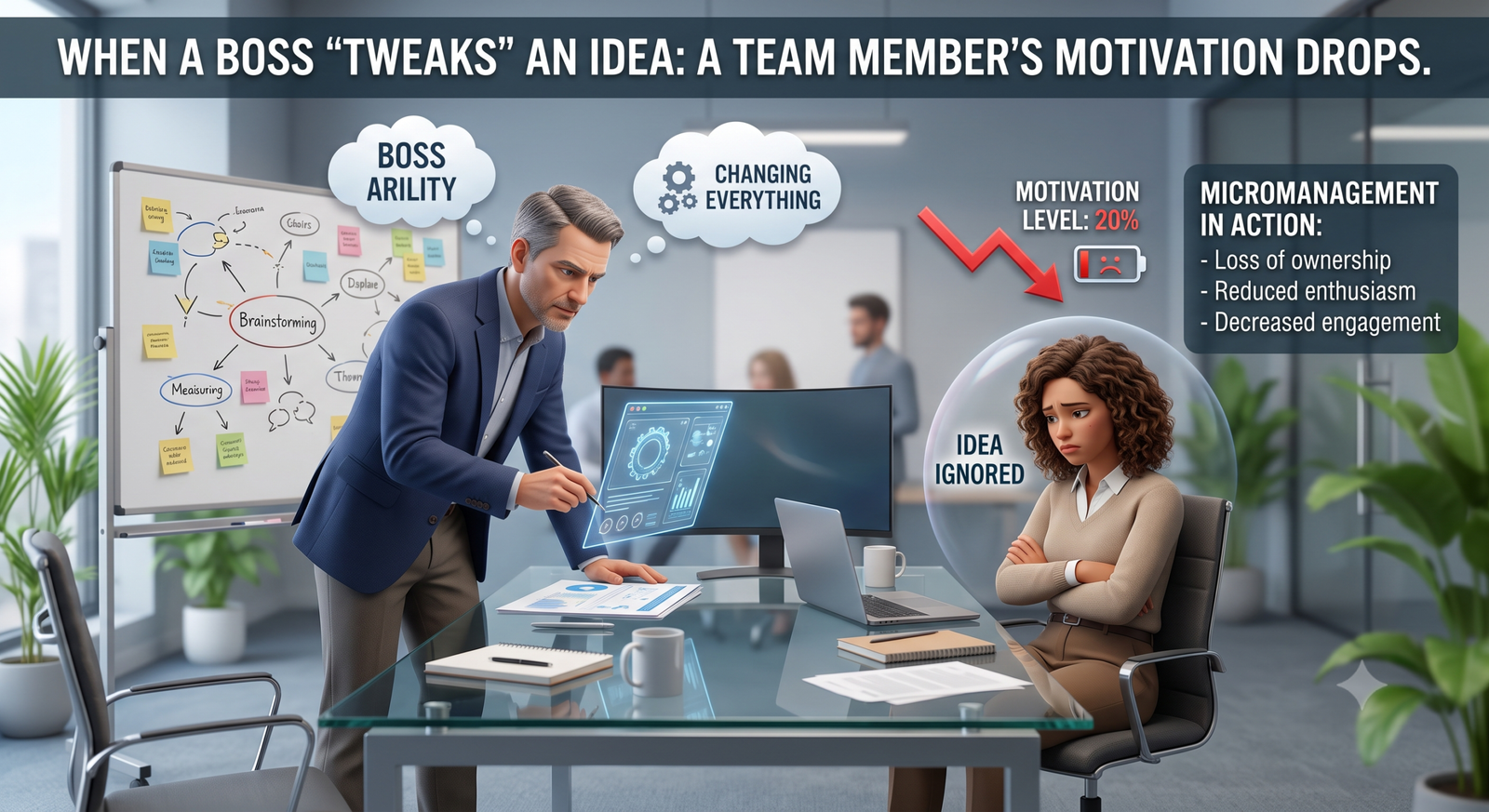
High-achieving leaders love to ‘add value.’ A team member brings a great idea. You tweak it just a little.
You say, ‘Great idea, but it would be better if…’ Stop right there.
This is a disastrous trade-off. You might improve the idea by 5%. But you just destroyed their ownership.
A 5% gain in content isn’t worth a 50% drop in motivation.
Remember: Your job is to make others feel like winners.
2. The Information Silencer: “I Already Knew That”
Leaders feel pressure to know everything. Someone shares an insight. You reply, ‘I already knew that.’
You think you look in control. Your team hears: ‘You just wasted my time.’
Keep this up, and they will stop sharing altogether. You are isolating yourself. You are subsidizing your own future ignorance.
3. When “Niceness” Becomes a Liability
Don’t confuse a lack of conflict with harmony. ‘Nice’ leaders avoid hard conversations.
But niceness is a poor substitute for clarity. When you ignore weak standards, high performers notice. They lose respect for you.
Stop avoiding the tension. Be direct.
Try this phrase: ‘Here’s the bar, and we’re not there yet.’

4. The “No, But, However” Correction Trap
These words are verbal erasers. You can agree with someone entirely. But if you say ‘however,’ you delete it all.
It turns collaboration into a correction. People feel overruled. They stop contributing.
Master the linguistic swap. Ditch ‘Yes, but…’ and use ‘Yes, and…’
Try saying: ‘I agree with that part. What I’d add is…’ Keep the momentum alive.

5. The Authenticity Shield
‘I’m just blunt.’ ‘That’s just how I am.’ Sound familiar? This is a dangerous shield.
This isn’t authenticity. It’s an excuse for poor behavior. Don’t use your personality to silence your team.
Professionalism means taking responsibility.
Own the flaw. Change the pattern.
From Habit to Awareness
You don’t need a massive reorganization to fix this. You just need self-awareness.
Stop over-improving, dismissing info, avoiding conflict, and hiding behind authenticity.
Growth starts with a hard look in the mirror. Which of these five habits are you practicing today?
- Beyond “How Are You?”: Smarter Ways to Support a Burnt-Out Coworker
- Beyond Hard Work: The Subtle Art of Signaling Your Next Promotion
- Beyond “Good Job”: 5 Surprising Ways Your Words Transform Work Culture
- Beyond “Deep Breaths”: 12 Science-Backed Micro-Habits to Reset Your Nervous System in 60 Seconds
- Are You Burned Out or Just Tired? The Subtle Red Flags You’re Likely Ignoring
Author Biography