
We live in a hyper-accelerated professional culture. We often feel trapped in “time-poverty.”
Many believe stress management requires a full hour of yoga. Otherwise, we just surrender to burnout. But waiting until 5 PM to decompress is dangerous. It allows cortisol to ravage your system all day.
Clinical insights show we can hijack the stress response in real-time. Use “One-Minute Stress Resets.” These minor physical interrupts signal safety to your brain. Shift from reactive to regulated before panic sets in.
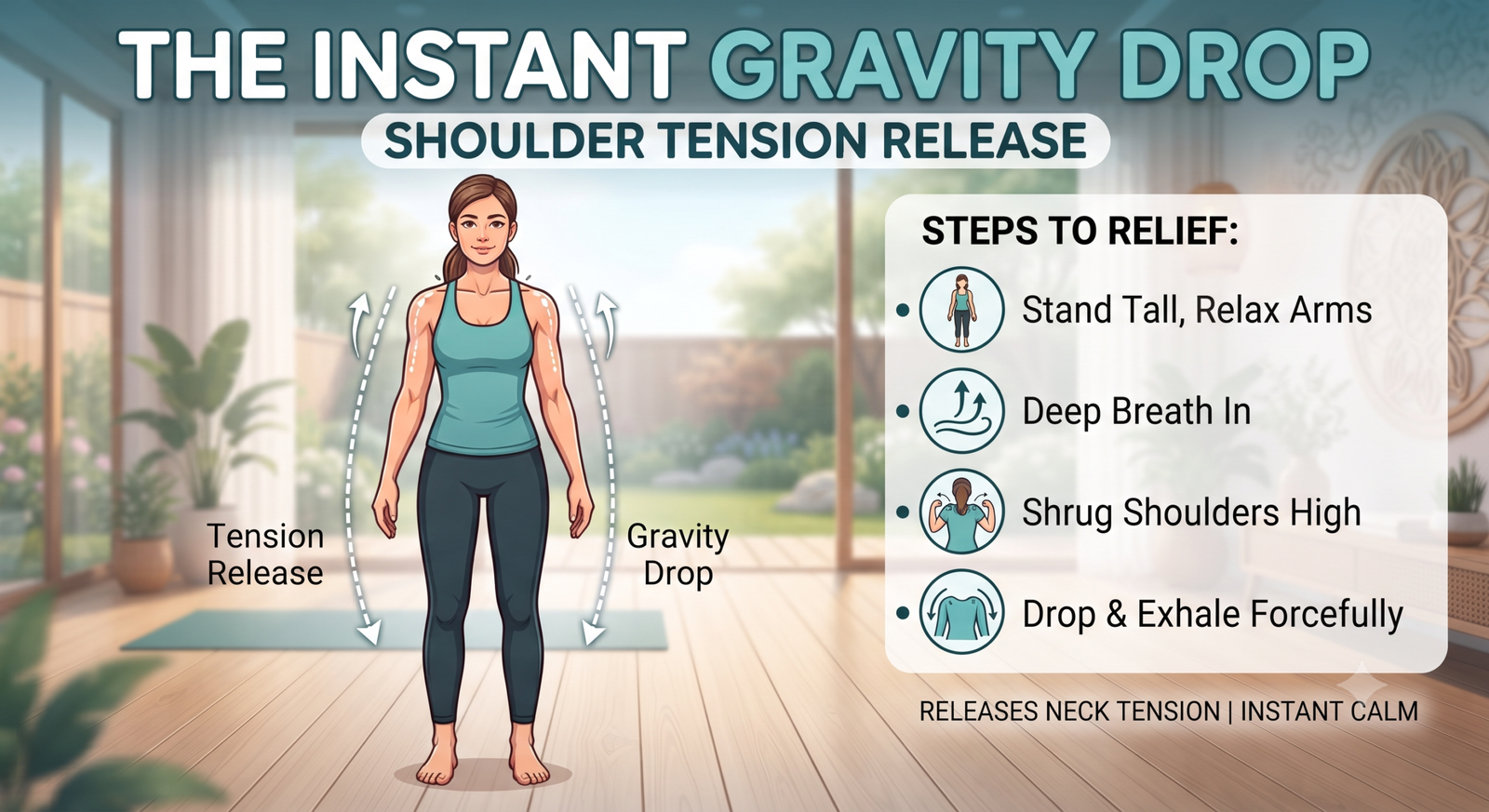
1. The Instant Gravity Drop: Shoulder Tension Release
Your trapezius muscles tighten first under pressure. It’s a primitive defensive reflex.
Try a manual override. Lift your shoulders to your ears for 5 seconds. Drop them suddenly.
This rapid drop sends a safety signal to your brain. Release built-up tension instantly.
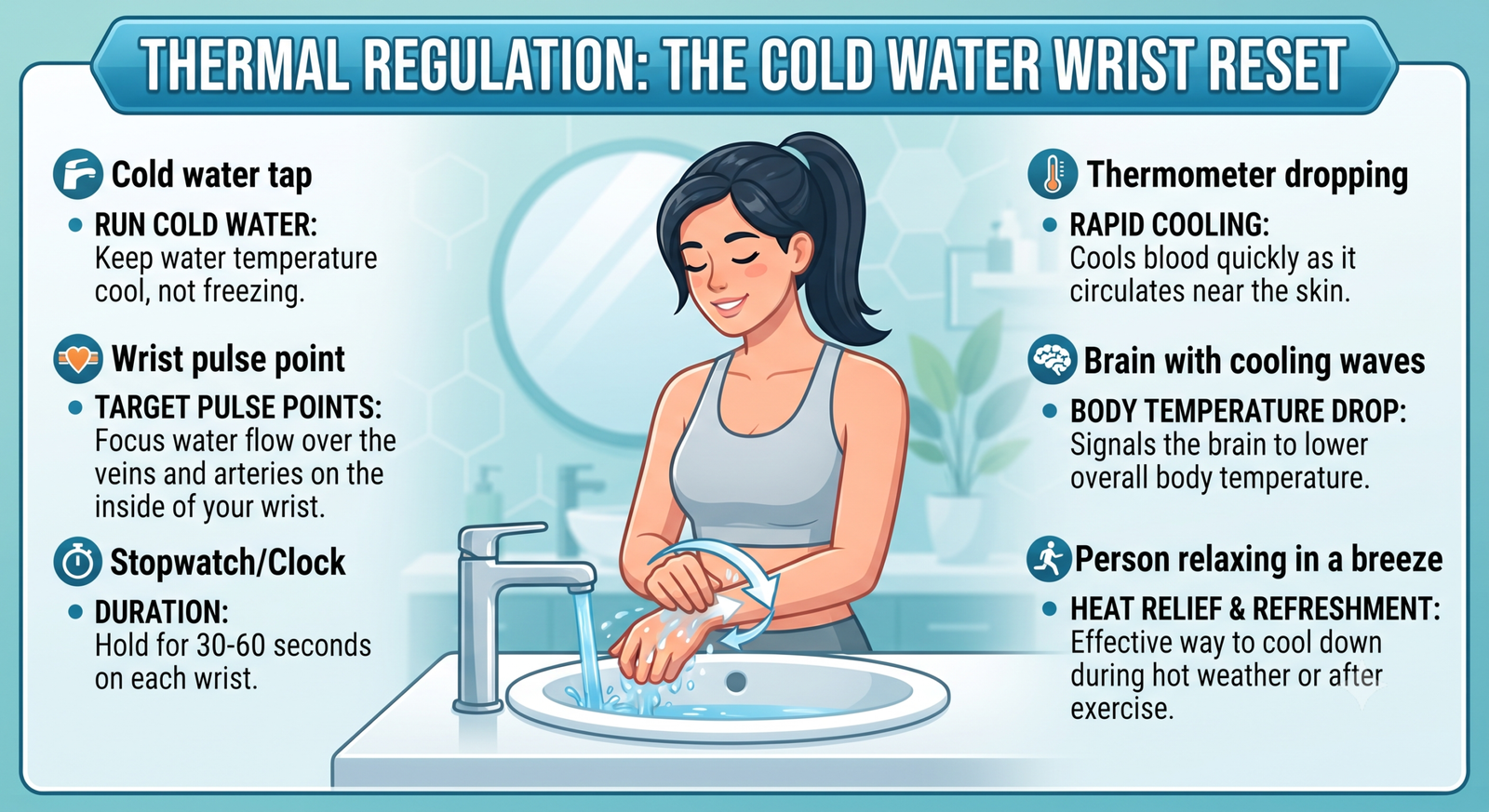
2. Thermal Regulation: The Cold Water Wrist Reset
Run cold water over your wrists for 30 seconds. It’s a potent bio-hack.
This cools the blood flowing through your arteries. It lowers your systemic temperature.
It dampens the “fight or flight” drive. Quickly calm your escalating heart rate.
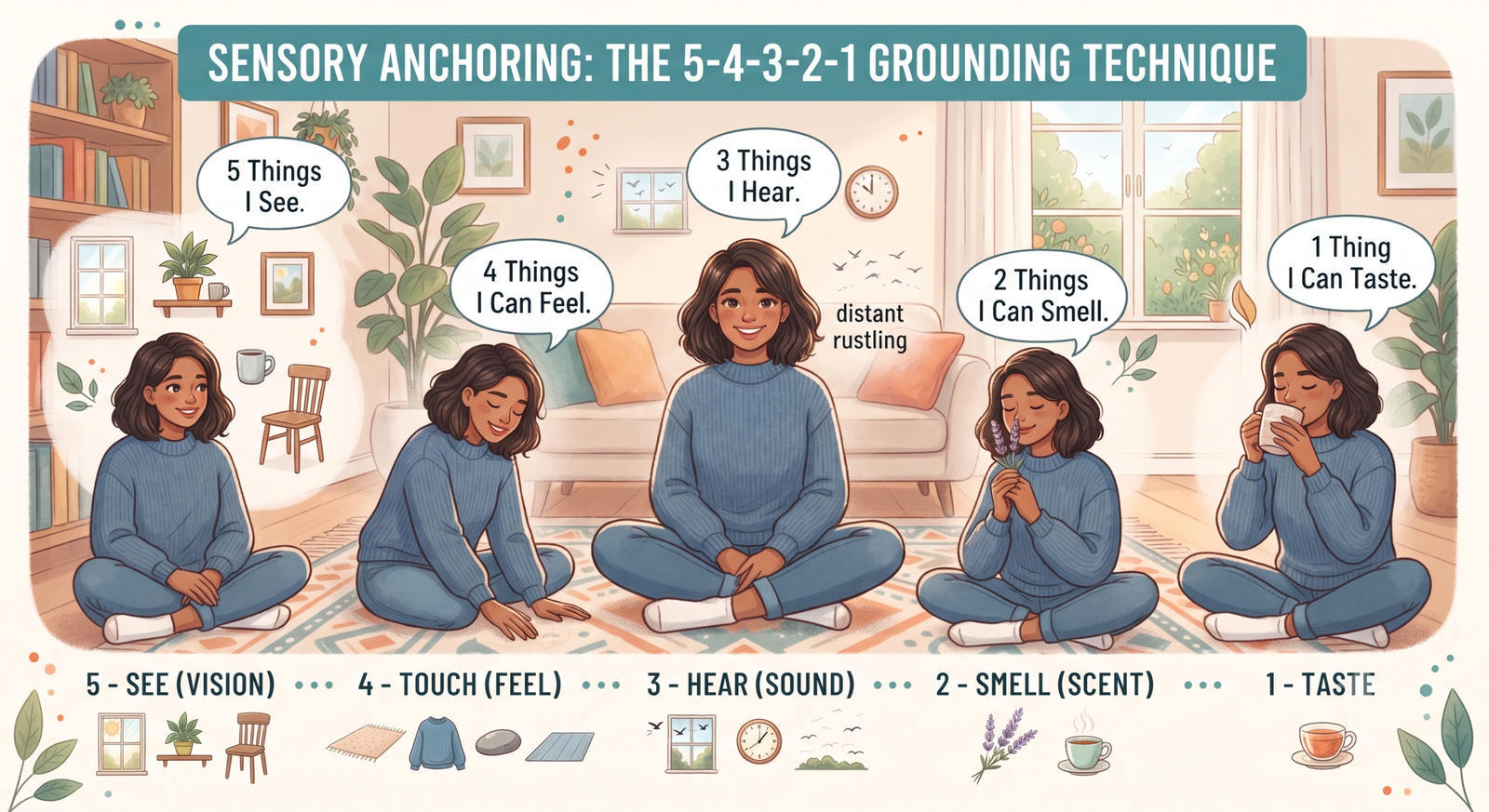
3. Sensory Anchoring: The 5-4-3-2-1 Grounding Technique
Anxiety thrives in the abstract future. Your senses only exist in the present.
Name 5 things you see. Name 4 you hear. 3 you touch. 2 you smell. 1 you taste.
This forces your brain to process concrete data. It inhibits alarm signals. Interrupt panic and regain control.
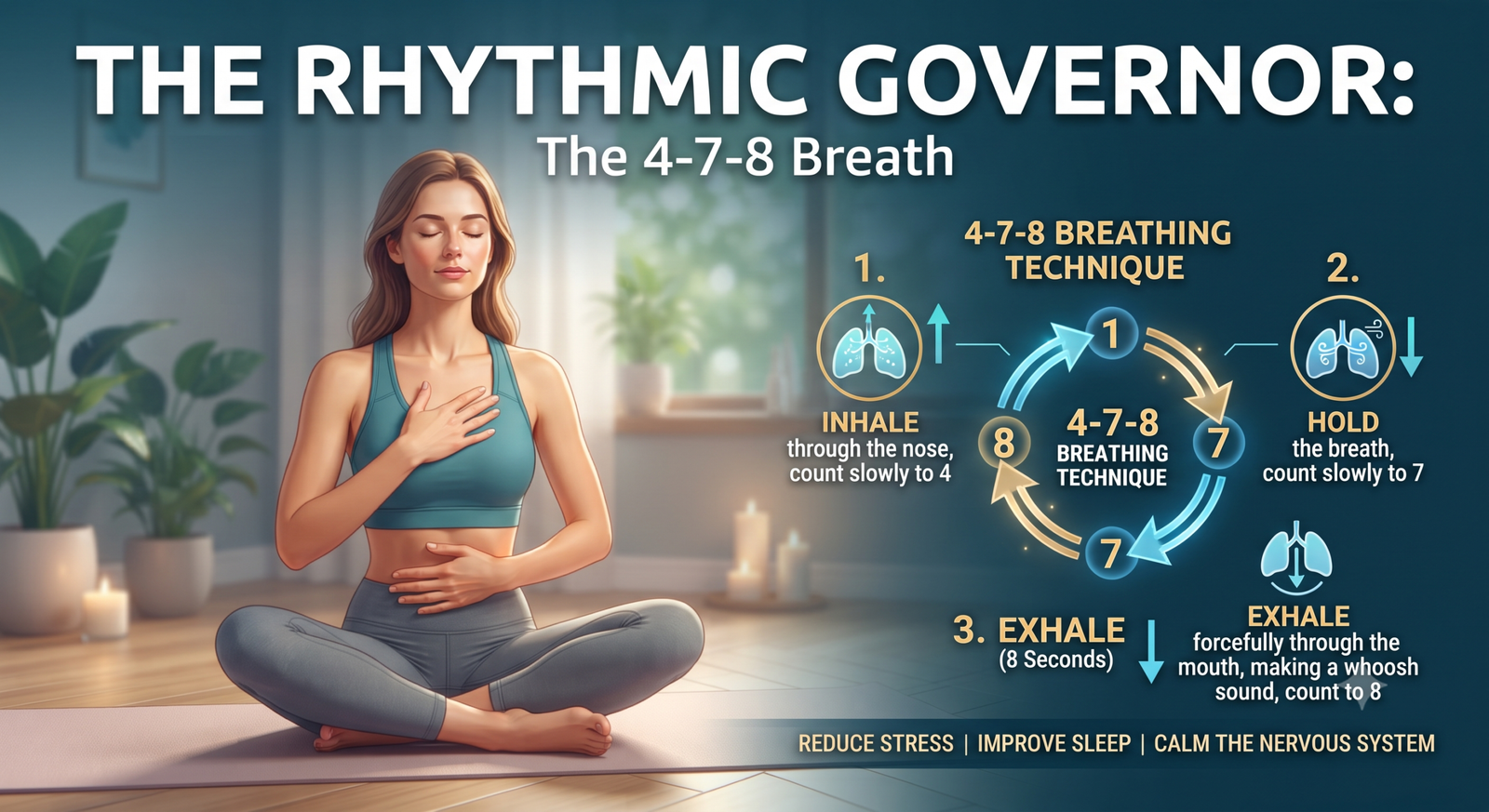
4. The Rhythmic Governor: The 4-7-8 Breath
Inhale for 4 seconds. Hold for 7. Exhale forcefully for 8.
The magic is in the long exhalation. It increases vagal tone.
It stimulates the “rest and digest” nervous system. Calm your heart rate almost instantly.
5. The Social Grace: The Reset Phrase
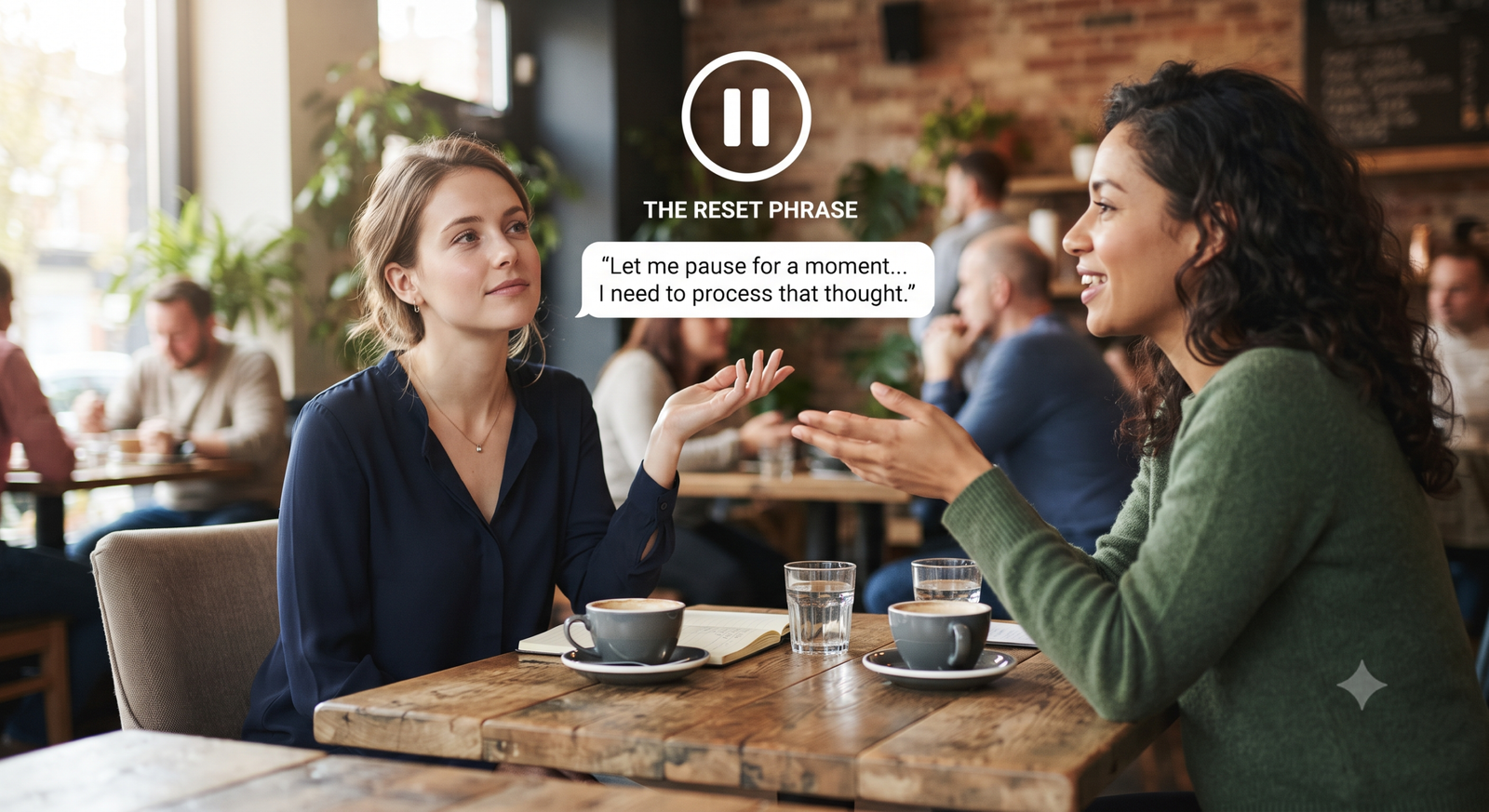
Stress makes us feel we must respond immediately. Resist that urge.
Say, “Let me gather my thoughts.” Then, pause. The silence is tactical.
It buys your brain processing time. Shift from a defensive reaction to a composed response.
6. Kinetic Stability: Feet Grounding Technique
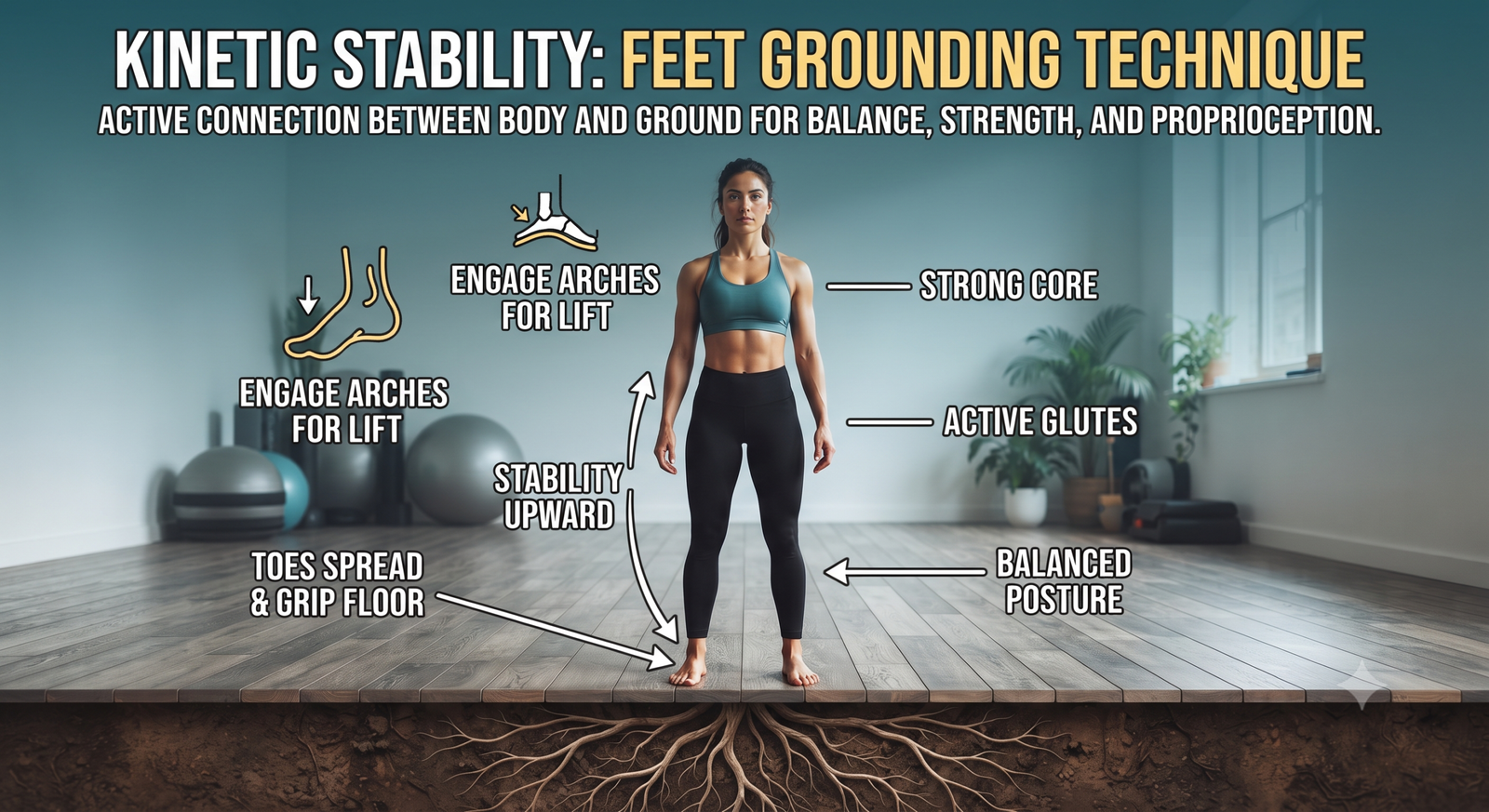
Does the situation feel chaotic or “up in the air”? Give your brain physical permanence.
Press your feet firmly into the ground. Feel the floor supporting you.
This kinetic anchor counteracts anxiety’s lightheadedness. Create instant stability.
7. Heart-Brain Alignment: Heart Rate Coherence
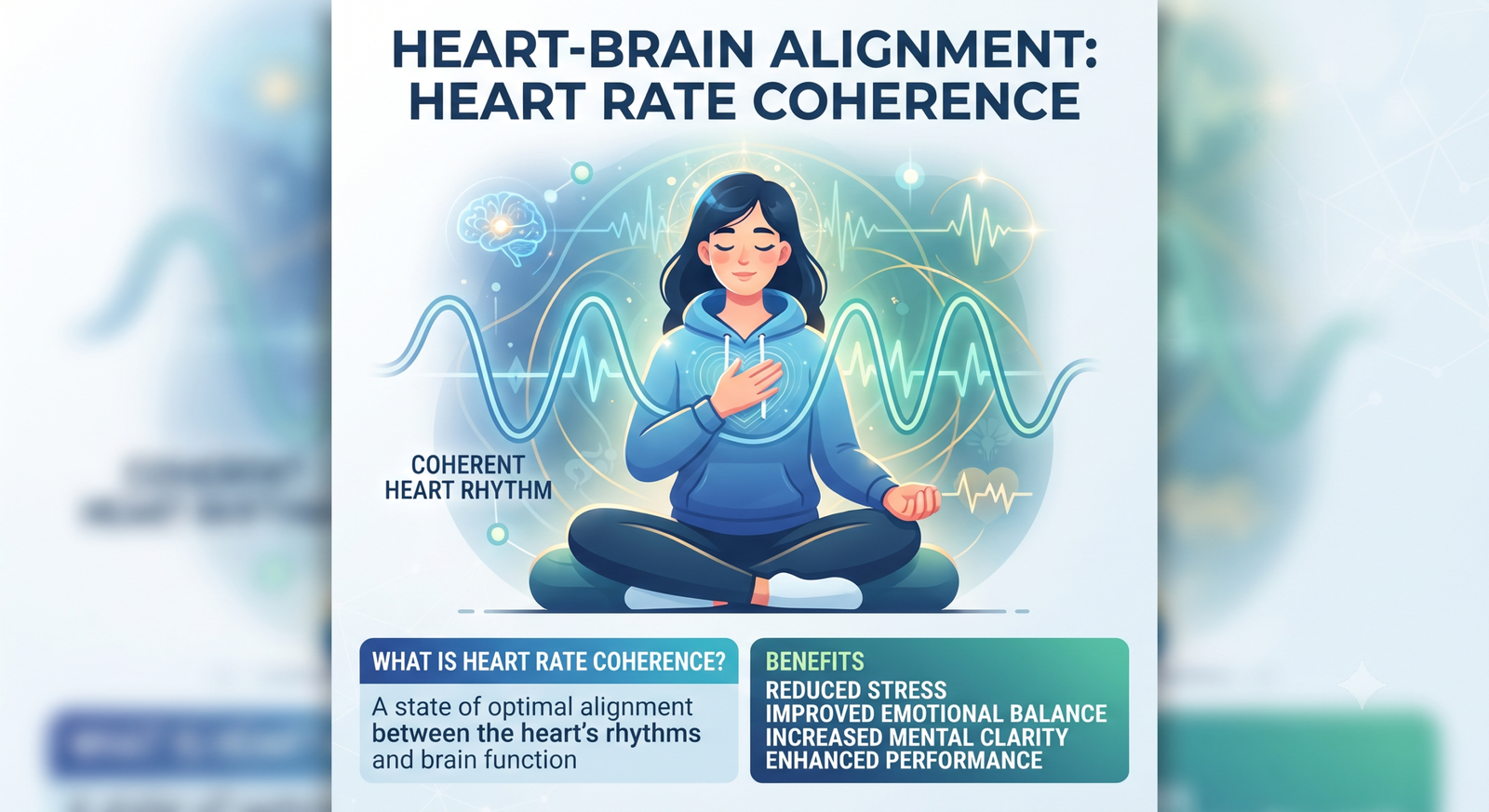
Place a hand over your heart. Breathe in a steady rhythm.
Visualize the breath flowing in and out of your chest. This creates “heart rate coherence.”
It acts as a powerful self-soothing mechanism. Reinforce a state of internal safety.
8. The Internal Audit: The Energy Check
Proactive resilience requires self-awareness. Rate your energy from 1 to 10.
Take immediate action to recharge. If you are at a “3,” take a walk. Drink water.
Identify depletion early. Prevent a total system shutdown at “0.” Recharge before pushing further.
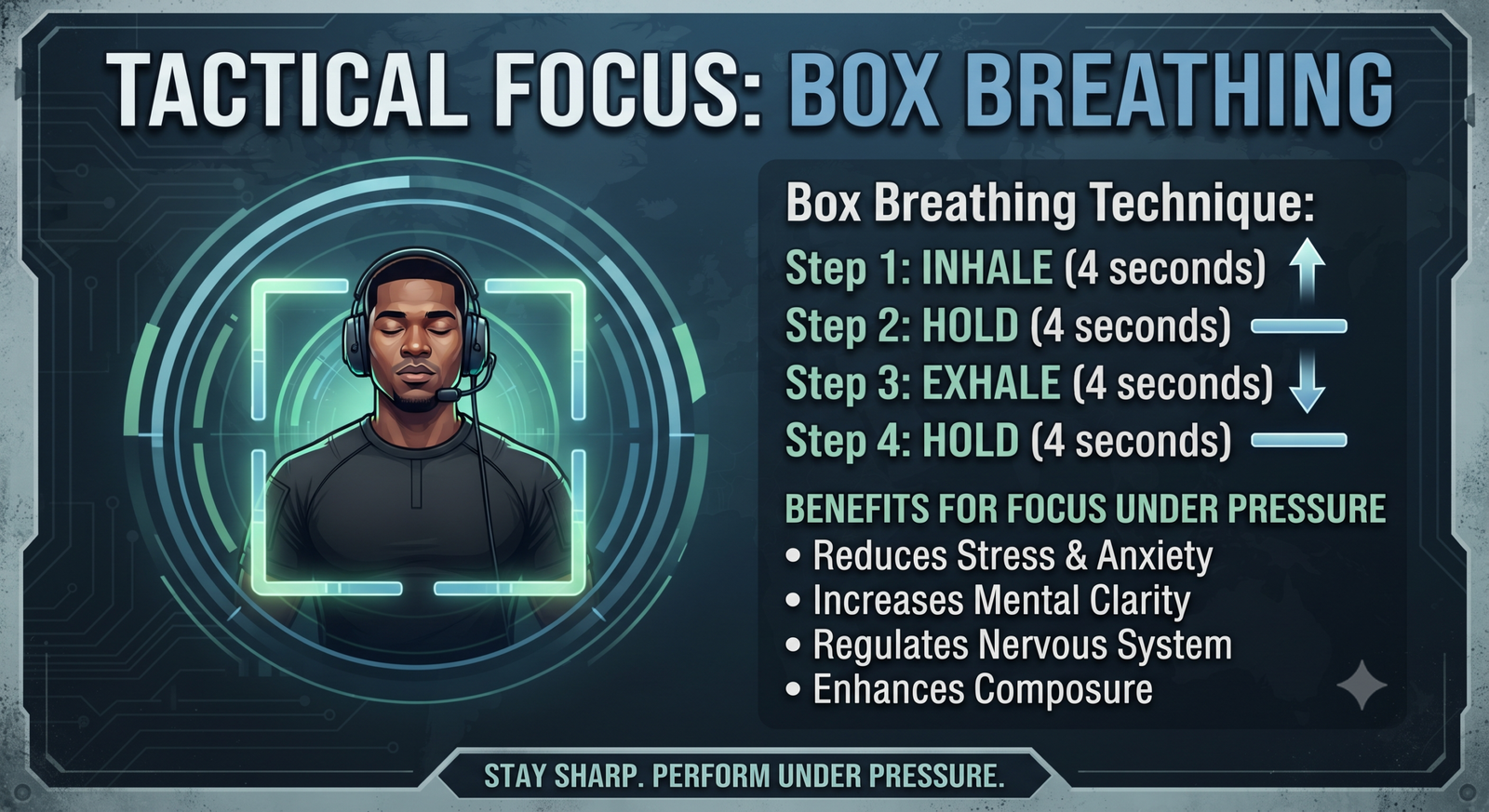
9. Tactical Focus: Box Breathing
This is favored by Navy SEALs for maintaining focus under duress.
Inhale for 4. Hold for 4. Exhale for 4. Hold for 4.
The rhythmic concentration forces the brain into a quiet alertness. Stay calm and focused under pressure.
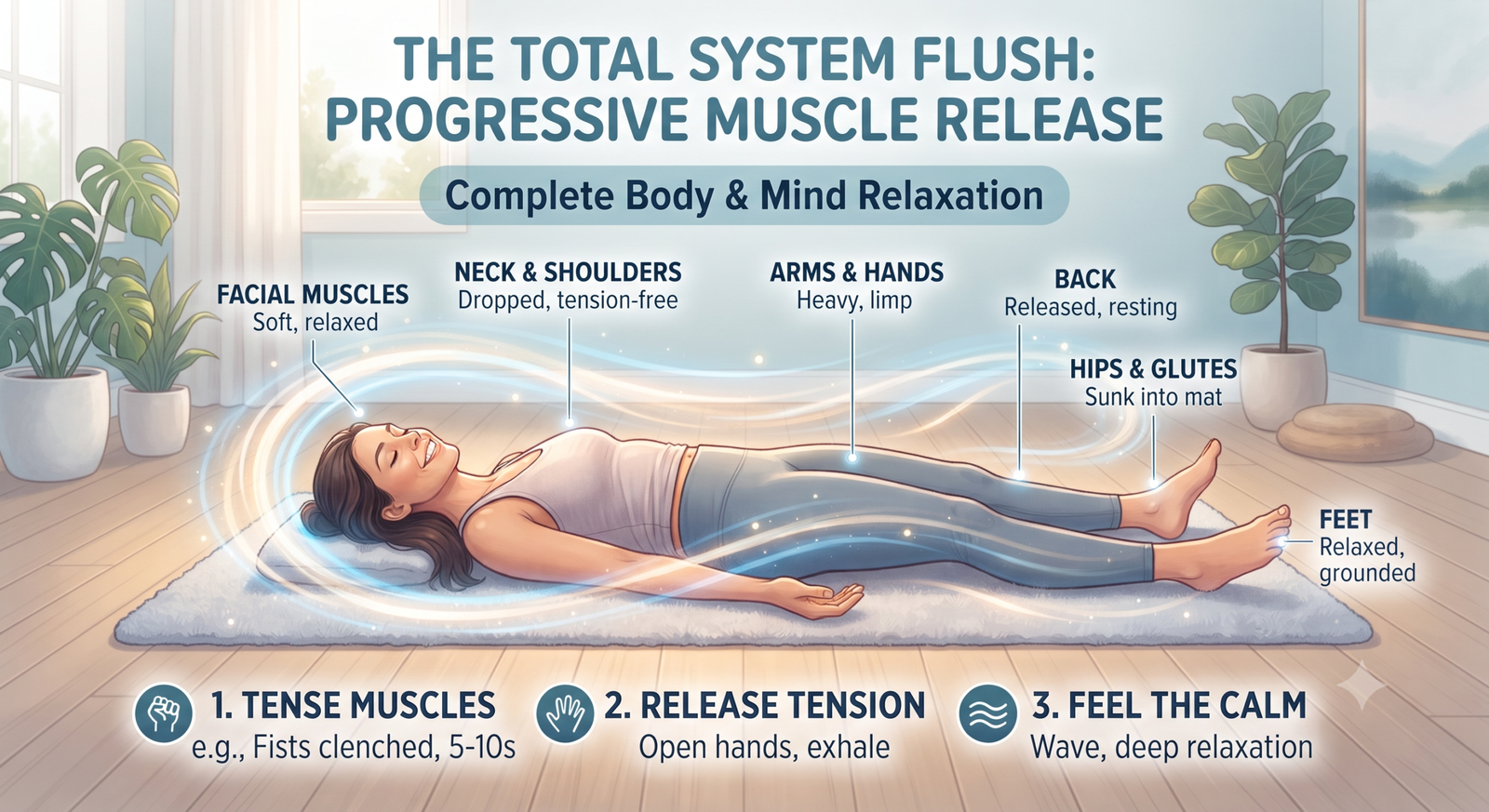
10. The Total System Flush: Progressive Muscle Release
When stress saturates the system, try a total-body flush.
Tense your entire body. Clench fists, squeeze core, tighten legs. Hold for 5 seconds.
Release everything at once. This forces a deep, involuntary relaxation. Reset built-up stress quickly.
Small Moments, Big Impact
Wellness isn’t a destination for the weekend. Resilience is not a marathon. It is a series of sixty-second sprints.
Integrate these micro-hacks into your daily rhythm. Reclaim the power to dictate your own physiological state.
If you have one minute to change your day, which reset will you reach for first?
- Beyond “How Are You?”: Smarter Ways to Support a Burnt-Out Coworker
- Beyond Hard Work: The Subtle Art of Signaling Your Next Promotion
- Beyond “Good Job”: 5 Surprising Ways Your Words Transform Work Culture
- Beyond “Deep Breaths”: 12 Science-Backed Micro-Habits to Reset Your Nervous System in 60 Seconds
- Are You Burned Out or Just Tired? The Subtle Red Flags You’re Likely Ignoring
Author Biography